SPECIAL CONTENTS
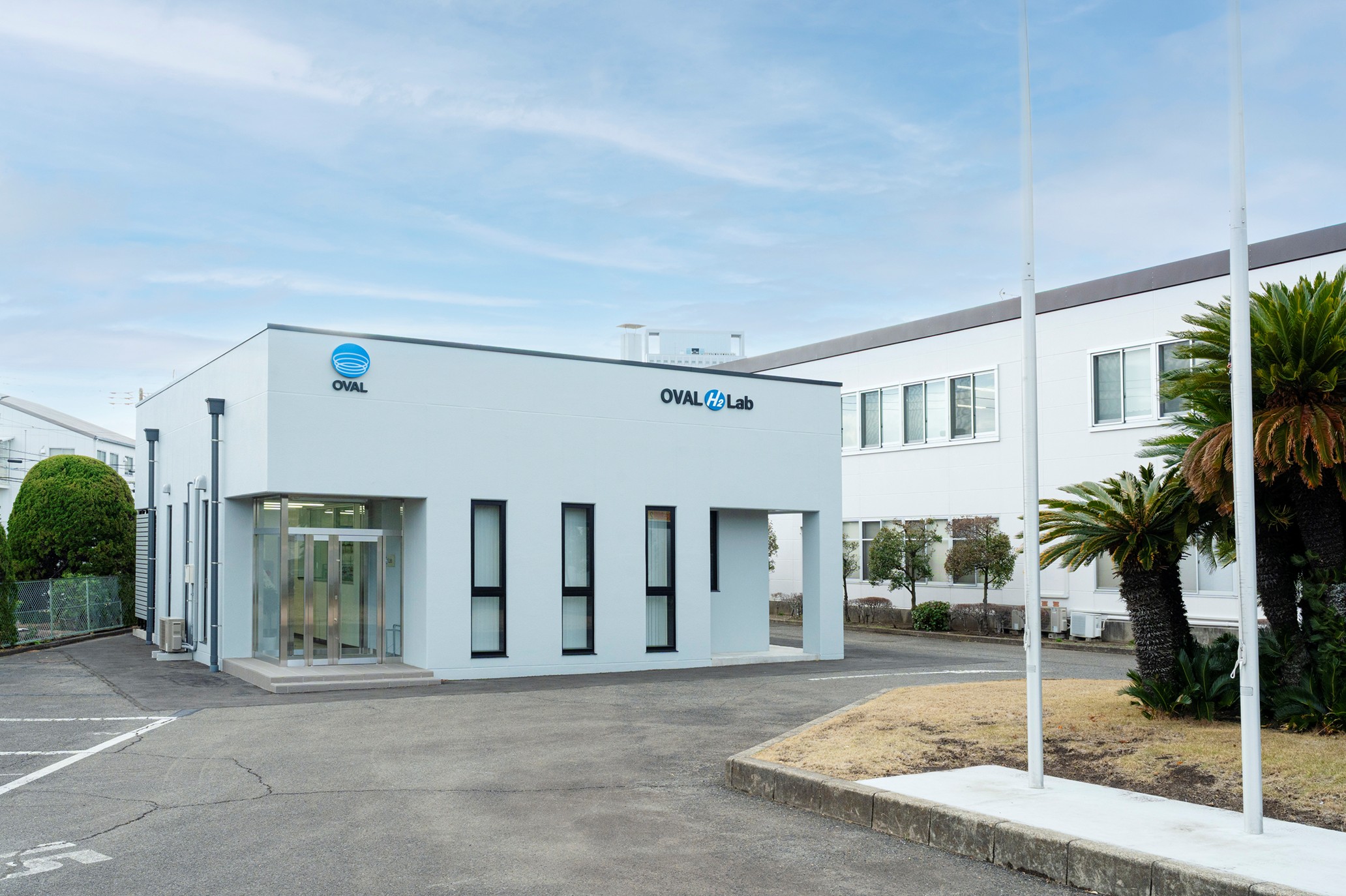
As the realization of a decarbonized society advances, the utilization of hydrogen as the next-generation energy source is progressing. Hydrogen is transitioning from demonstration stages to commercial use in applications such as power generation and industrial use.
In this context, in order to utilize energy as a social infrastructure, technology that can 'accurately measure' production volume, transportation volume, and consumption volume is indispensable.
Against this backdrop, Oval opened the hydrogen real gas flow calibration facility "OVAL H₂ Lab" in February 2026.
This facility is rare in Japan as it can calibrate flow meters with actual hydrogen gas flow at high volumes.
What is the importance of "calibration" in hydrogen measurement, and what "added value" is created
by the establishment of this new facility?
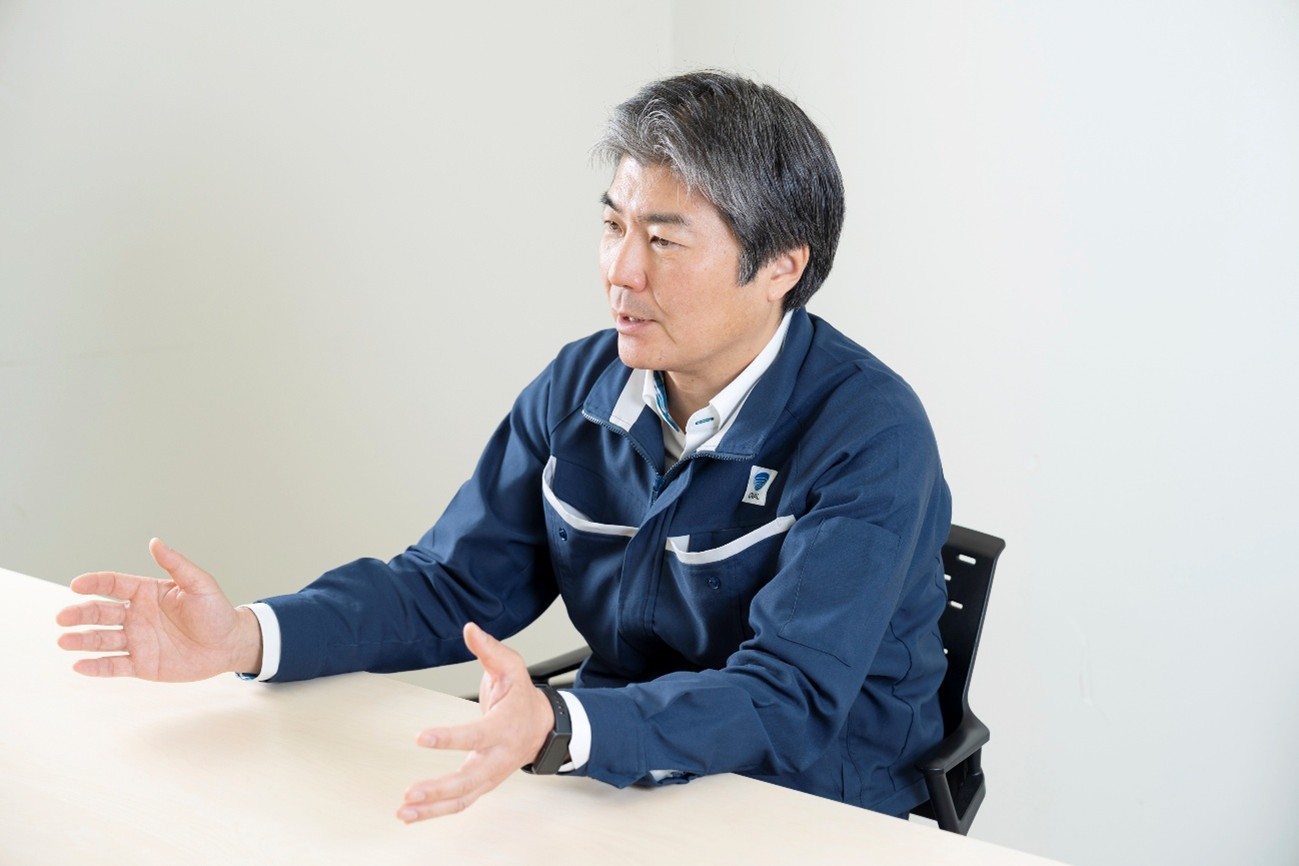
We spoke with Takeshi Wakamatsu, Department Manager of the Inspection Department.
Hydrogen is expected to be a key to achieving carbon neutrality as a clean energy source that emits no carbon dioxide during combustion.
For example:
・Conversion of natural gas boilers to hydrogen firing
・Hydrogen co-firing in thermal power plants
・Fuel usage in industrial sectors
The applications are steadily expanding.
In these fields, a crucial technology for managing and trading energy is the "accurate measurement of hydrogen."
Mr. Wakamatsu explains:

“Energy management and trading require accurate knowledge of how much energy is produced, transported, and consumed.
Hydrogen is no exception; indeed, because it is a new energy source, reliable measurement technology is essential.”
One of the means to grasp the flow of energy is through flow meters. A flow meter is a measurement device that measures the amount of
gas or liquid flowing through pipes and is indispensable at energy supply sites.
To maintain the accuracy of these flow meters, "calibration" is necessary.
Calibration refers to the process of flowing actual gas or liquid while comparing the measurement values of the flow meter under test
with a reference device to check and adjust for measurement deviations and variations.
Generally, air is often used as the test gas for calibrating hydrogen flow meters. However, the physical properties of hydrogen and air differ significantly.
For instance:
・Density
・Viscosity
・Speed of sound
・Thermal conductivity
Since these properties differ greatly, calibrations performed with air may cause errors in actual hydrogen measurement.
“To achieve high-accuracy hydrogen measurement, calibration with actual hydrogen, so-called ‘real gas,’ is ideal.
However, facilities in Japan capable of calibrating flow meters with real hydrogen flow have been limited. The OVAL H₂ Lab was born
against this backdrop.”
The greatest feature of OVAL H₂ Lab is its ability to perform large-volume calibration using actual hydrogen gas,
with a maximum flow of 650 Nm³/h.
Nm³/h (normal cubic meters per hour) denotes the volume of gas at standard conditions per hour; this facility can flow hydrogen equivalent to up to 650 cubic meters per hour. Such a scale for real hydrogen gas calibration is rare nationwide.
Also, calibration requires a reference device called a "master meter," which serves as a measuring standard to verify the accuracy of flow meters.
At OVAL H₂ Lab, five types of master meters with different flow ranges are installed, allowing calibration with a wide flow range and
high precision.
Furthermore, hydrogen is sensitive to temperature changes. Therefore, the facility incorporates a special piping structure
to stabilize temperature.
“Hydrogen coming from cylinders is initially cold, creating a temperature difference from room temperature. Such a difference prevents stable calibration. First, a heat exchanger adjusts the hydrogen temperature close to room temperature, then it passes through a long pipe with fins
to acclimatize to room temperature.”
Thanks to this design, calibration can currently be performed under high-accuracy conditions with a ±1% error margin.
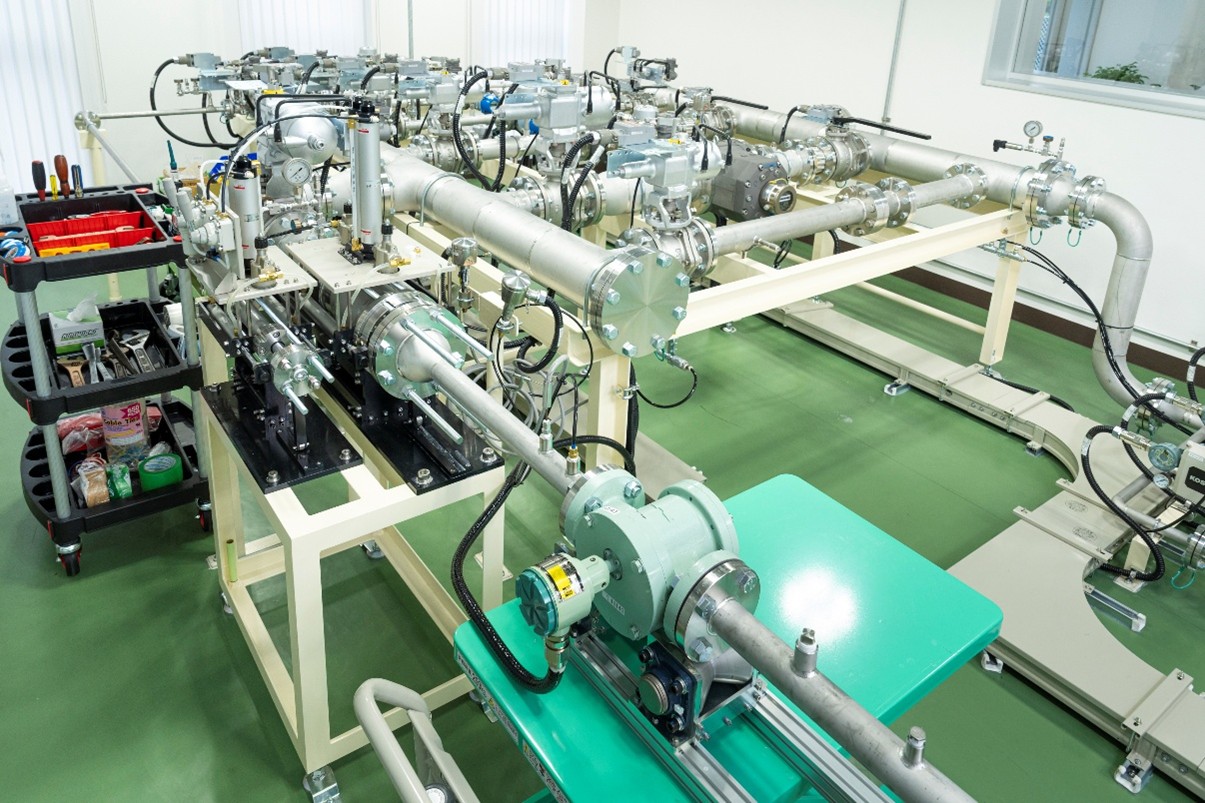
Five Types of Master Meters
Building OVAL H₂ Lab was an unprecedented project for Oval. The design involved multiple departments, including the Inspection Department, Manufacturing Department, System Engineering Department, and Management Department.
“The biggest challenge was designing a completely new facility from scratch. Opinions differed among departments on where to put priority—flow volume, facility scale, safety measures, etc.”
However, by bringing together each department’s expertise and engaging in repeated discussions, we succeeded in designing equipment
that balanced both safety and practicality. Since hydrogen is a light, easily diffusive, and highly flammable gas, safety was a critical concern
in the design.
For example:
・Explosion-proof lighting and power equipment
・Hydrogen detectors
・Heat sensors
These systems are installed to respond quickly in emergencies. Additionally, solar panels are installed on the facility's roof to supply a part of
the electricity used in OVAL H₂ Lab through solar power, reflecting consideration for reducing environmental impact.
Though newly completed, OVAL H₂ Lab has already attracted considerable external interest, with increasing tours and inquiries.
The facility supports calibration not only for Oval's own flow meters but also for those from other manufacturers.
"Periodic calibration and maintenance are essential to maintain flow meter accuracy. Flow meters previously calibrated with substitute gases
like air can achieve more reliable adjustment through calibration with actual hydrogen"
As energy supply, transport, and use of hydrogen continue to expand, measurement technology is expected to be a vital element supporting
the realization of the hydrogen society.
"It would be undesirable if the inability to measure hydrogen accrately became a bottleneck impacting the realization of a hydrogen society.
We want to leverage our knowledge and experience as a specialized flow meter manufacturer to enhance the reliability of hydrogen measurement and contribute to industrial development."

(Writer's Note)
The role of hydrogen energy will grow further in the realization of a decarbonized society.Among the key elements supporting
energy infrastructure is technology that "measures hydrogen accurately." OVAL H₂ Lab is a rare domestic facility enabling calibration
with large volumes of real hydrogen gas and is expected to significantly contribute to improving hydrogen measurement reliability of hydrogen measurement reliability. By leveraging their technology and expertise cultivated as a flow meter manufacturer, Oval is expected to support industrial development and the realization of the hydrogen society by enhancing the reliability of hydrogen measurement.

 ご購入
ご購入